
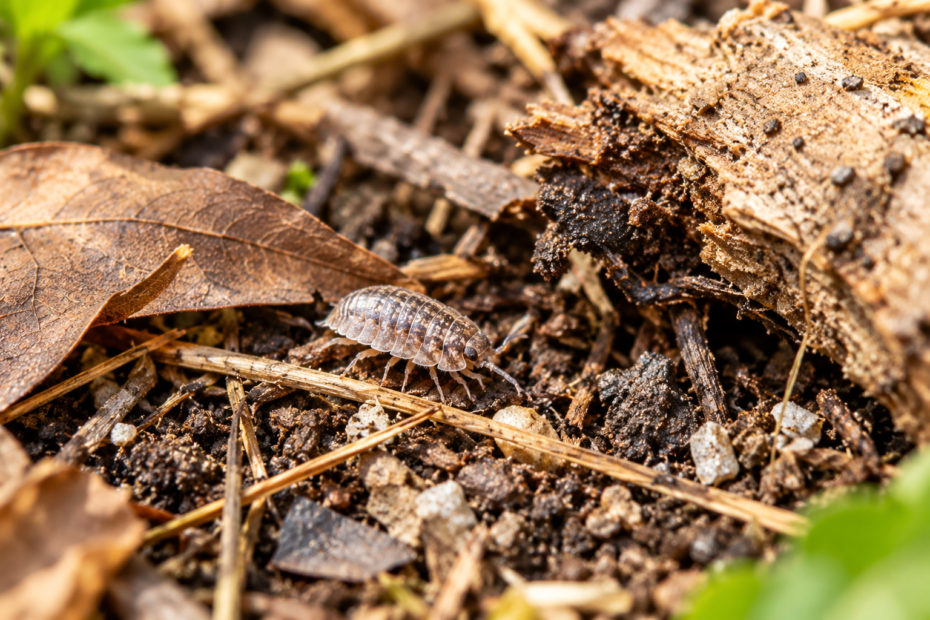
A small hygrometer can be helpful beside an isopod enclosure, but its percentage is easy to overinterpret. It measures relative humidity in the air around the sensor. It does not measure how wet the substrate is, and one reading cannot describe every sheltered space in a habitat.
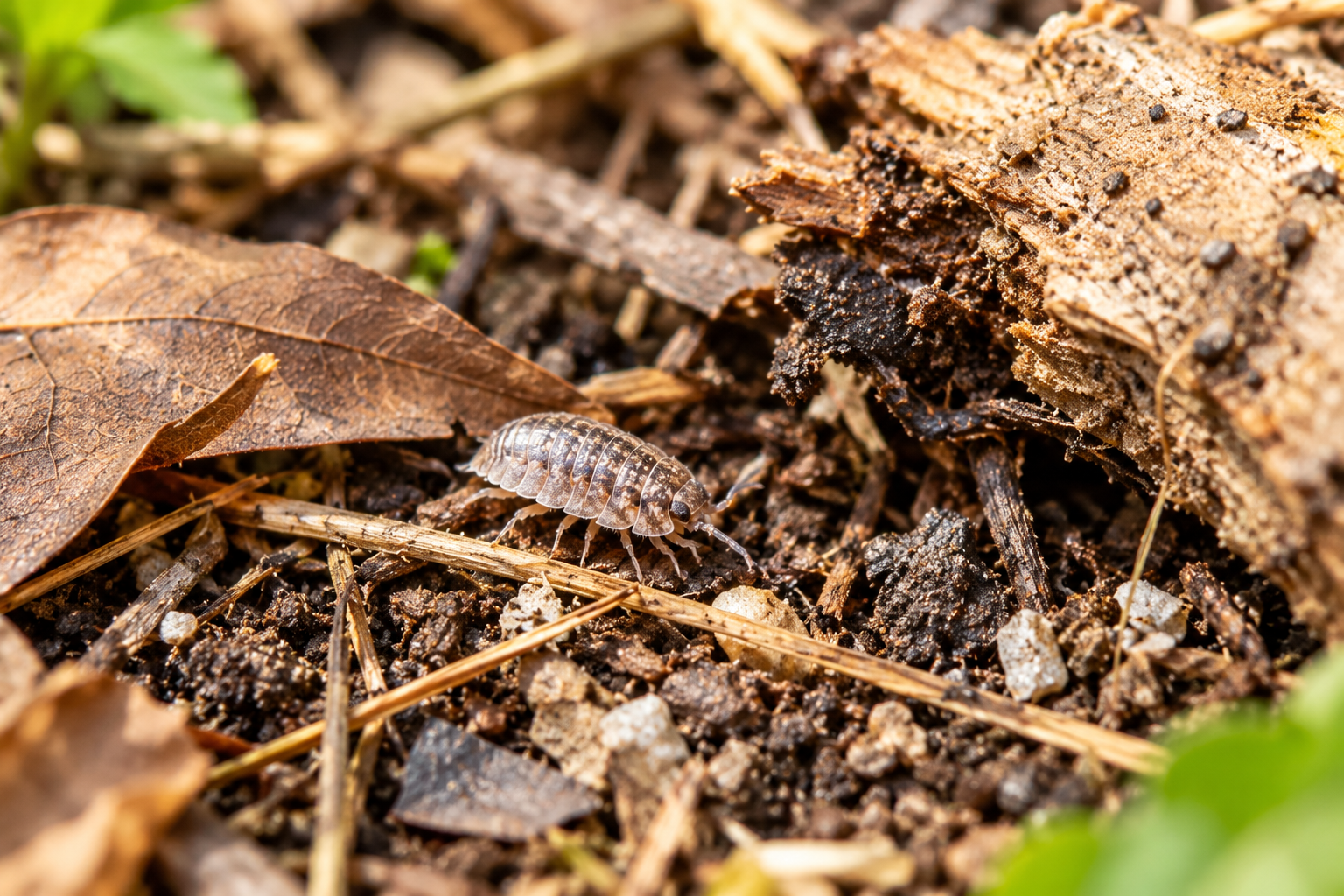
Relative humidity is a measure of air
Relative humidity compares the water vapor in the air with the maximum amount that air can hold at its current temperature. As NOAA explains, the percentage can change with temperature even when the amount of water vapor stays the same. That is why a reading of 80% is not a direct statement that the substrate is “80% wet.”
Substrate moisture is a separate property: water held in the material and its pores. It depends on the substrate itself, where you check, and how much water it has retained. A hygrometer’s sensor does not reach into the soil, leaf litter, or moss to measure that water.
One enclosure contains several small climates
Air beside a damp corner, beneath bark, near a ventilated lid, and out in the room can differ. A sensor reads the small patch of air around it, so moving the same hygrometer a few inches can change the result. A reading taken against a wet wall or directly over saturated moss may describe that spot better than the habitat as a whole.
That variation matters biologically. Terrestrial isopods lose water to their surroundings, and controlled studies show that activity and other responses to temperature and relative humidity can differ among species. Research comparing Porcellio scaber and Armadillidium vulgare found different response patterns; it does not establish one household hygrometer number as the right target for every colony.
Use the reading as context, not a verdict
If you use a hygrometer, keep it near the animals’ level and note where it is. Compare readings at the same position and time of day, and record temperature alongside humidity. If you move the sensor between a moist and a drier area, give it time to settle and record each location. That makes the comparison more useful than chasing a changing number.
Then check the habitat itself: Is there a moisture gradient? Does the substrate feel damp where it should, without standing water? Is there condensation, a persistent sour smell, or mold spreading through the enclosure? Those observations, together with species-appropriate care, help you decide whether anything needs adjustment. Avoid adding water solely because one sensor reports a low percentage.
For students, this is a tidy lesson in measurement: every instrument answers a particular question, at a particular place. Have students record the sensor location, temperature, relative humidity, and visible conditions rather than labeling a whole enclosure “wet” or “dry” from one reading. Keep handling and disturbance low. The observations can describe local conditions; they do not by themselves prove why an isopod chose a particular shelter.
For the broader habitat basics, see the Ficarro Farms isopod care guide and the first-colony setup and arrival checklist. For a classroom test of animal distribution, our light-versus-dark pill bug experiment guide explains why changing one condition at a time matters.
Sources
- NOAA NESDIS, “What Is Humidity?”
- Tuff et al. (2015), “Effects of microclimate on behavioural and life history traits of terrestrial isopods.”
- Tuff et al. (2019), “Interspecific variation in responses to microclimate by terrestrial isopods.”
Written October 19, 2026.