
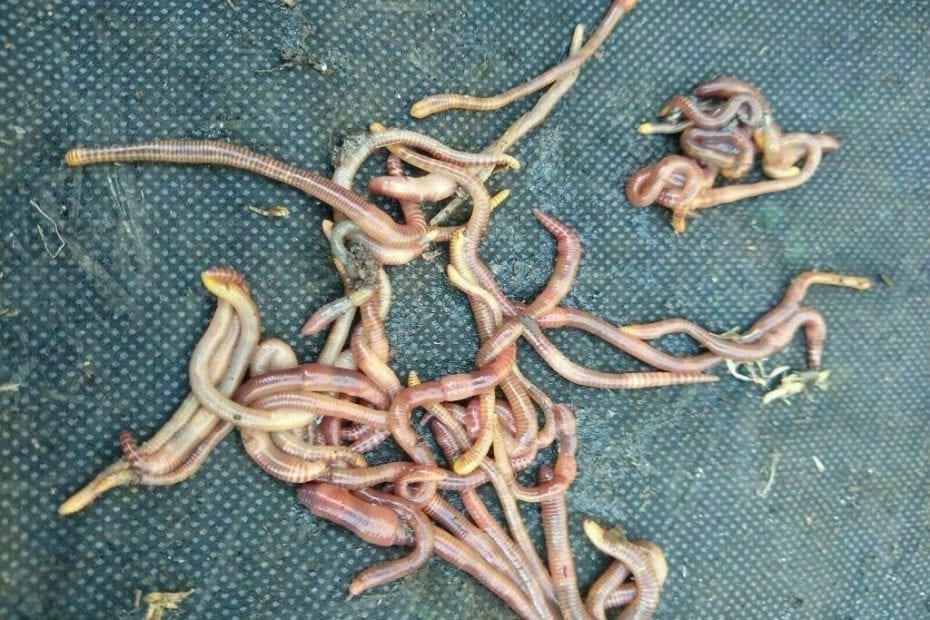
Red wigglers are remarkably effective decomposers, but their digestive system works differently from ours. They do not bite or chew food with teeth. Instead, food passes through a crop and then into a muscular gizzard, where small mineral particles help grind it into finer material.
That is why a worm bin needs some form of grit. It is not a specialized supplement or a complicated feeding program. It is simply a modest supply of clean, fine mineral particles that the worms can swallow and use in the gizzard.
What grit does inside a red wiggler
Food entering an earthworm is moistened and moved through the digestive tract. The crop serves mainly as a temporary holding chamber. The gizzard is the mechanical grinder. Its muscular walls work against swallowed particles of sand, soil or other mineral material to break food into smaller pieces before digestion continues in the intestine.
This matters in a worm bin because much of what we call “worm food” is actually a mixture of softened plant tissue and microorganisms growing on it. Grinding increases the surface area available to digestive enzymes and gut microorganisms. Grit supports that physical process; it does not replace the microbial decomposition that begins before the worms consume the food.
Good grit choices for a worm bin
Several inexpensive materials can provide suitable particles:
- Finely pulverized eggshell: Readily available, easy to see and rich in calcium carbonate. The pieces need to be ground much smaller than the flakes produced by crushing a shell in your hand.
- Clean sand: A small amount works, but too much can settle and compact wet bedding.
- Pulverized oyster shell or oyster-shell flour: A common mineral grit, provided it is plain and contains no medication or other additives.
- Clean mineral soil: A little uncontaminated soil can supply grit, although outdoor soil may also introduce mites, insects, pesticides or other organisms you did not intend to add.
- Rock dust or similar fine mineral material: Use only a clean product intended for horticultural or animal-care use, not construction waste.
For most household and classroom bins, finely ground eggshell is the simplest choice. It is inexpensive and easy to add in a controlled amount. Clean sand is also useful, but it should remain a minor ingredient rather than becoming a layer at the bottom of the bin.
How to prepare eggshell grit
- Rinse away egg residue so the shells do not add odor or attract pests.
- Let the shells dry completely.
- Grind them with a mortar and pestle, spice grinder or similar tool until the material is closer to coarse powder than sharp flakes.
- Scatter a small amount across the surface and mix it lightly into the upper bedding.
Avoid breathing the dust while grinding or pouring it. Large shell fragments are not especially useful as grit until weathering and microbial activity reduce them, so finer preparation makes the material available sooner.
How much grit should you add?
There is no single dose that fits every worm bin. Container volume, the amount of mineral material already present, bedding composition and feeding rate all matter.
Oregon State University Extension gives one useful reference point: about one-half cup of grit for a 14-gallon bin every couple of months. That is guidance for a particular bin size, not a reason to pour half a cup into a small classroom container. Scale the amount down for smaller systems, distribute it through the bedding and avoid concentrated piles.
California’s recycling agency gives a simpler setup recommendation of one tablespoon of clean grit mixed into the bedding. The difference between published instructions is a reminder to think proportionally. A lightly mineralized bedding mix is the goal; grit should not dominate the habitat.
An established bin that already contains soil, old castings and eggshell particles may need very little additional material. A new bin made almost entirely from clean shredded paper and food scraps is more likely to need an intentional grit source. Our guide to preparing shredded-paper bedding for red wigglers explains how to build that carbon-rich base without compacting it.
What grit cannot fix
Grit is part of normal care, but it is not a universal remedy. Adding eggshell will not correct:
- waterlogged or airless bedding,
- excess food accumulating faster than it decomposes,
- heat from a large mass of fresh scraps,
- salty, oily or unsuitable food, or
- a bin that is drying out.
Calcium carbonate in eggshell and oyster shell can resist acidification, but that does not mean every sour-smelling or struggling bin needs more shell. First inspect moisture, airflow and feeding. The worm-bin odor guide provides a more useful diagnostic sequence, and the feeding-capacity guide explains why food should be increased according to what the bin is actually processing.
Materials to avoid
Do not improvise with concrete dust, drywall, cat litter, salty beach sand or unknown industrial powders. These materials may contain salts, binders, fragrances or other substances that do not belong in a living bin. Coarse gravel is also a poor substitute: it takes up space but does not provide the fine particles worms can readily swallow.
If you use a commercial poultry grit or chick starter, verify that it is plain and nonmedicated. Oregon State specifically lists nonmedicated chick starter as an option; medication intended for poultry is unnecessary in a worm bin.
A useful classroom connection
Grit offers a clear way to connect anatomy with animal care. Students can examine prepared eggshell, sand and soil under a hand lens, compare particle size and predict which particles a red wiggler could swallow. They can then trace the route from mouth to crop, gizzard and intestine using a digestive-system diagram.
The important lesson is not merely that “worms eat dirt.” It is that anatomy determines husbandry. A toothless animal with a muscular gizzard needs environmental particles to perform mechanical digestion. That biological fact explains a practical choice made when preparing the habitat.
For a classroom investigation, keep grit available in every long-term treatment rather than withholding an essential digestive material from one group. Students can compare safe grit sources or preparation methods while keeping moisture, food, temperature and worm number consistent.
A simple routine
When starting a bin, mix a modest amount of fine grit into the damp bedding. Add more occasionally as fresh bedding replaces old material, especially if the system contains little soil or mineral matter. Observe the whole bin rather than treating grit as a schedule that must be followed exactly.
If you are beginning a new culture, start with our red wiggler bin setup guide. Current red wiggler counts can be found in the Ficarro Farms worm category; product pages show current availability.
Sources and further reading
- Oregon State University Extension: Composting with Worms
- University of Illinois Extension: Vermicomposting
- CalRecycle: Composting with Worms
Grit is a small part of a worm bin, but it illustrates a larger principle: good care follows biology. Give red wigglers clean, fine mineral particles, then concentrate on the factors that shape the whole habitat—moisture, oxygen, bedding, food and temperature.