
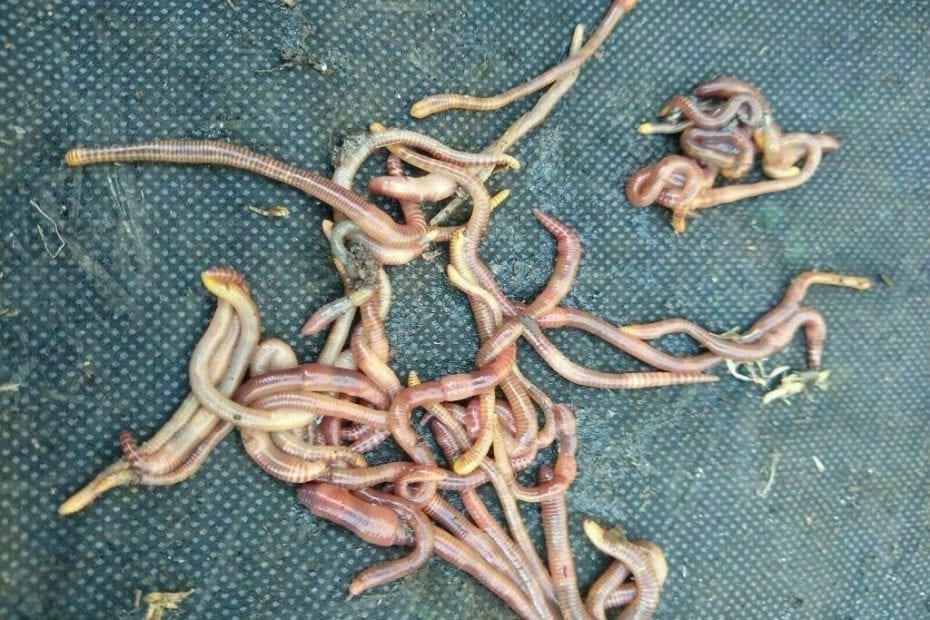
A healthy red-wiggler bin should not smell like rotting garbage. It may have a mild, earthy scent when you open it, but a strong sour, rotten or sewage-like odor is evidence that conditions have shifted—not a normal consequence of keeping worms.
The practical question is not simply how to hide the smell. It is what the odor tells you about moisture, oxygen and the amount of decomposing food in the bin. Correct those conditions and the odor usually fades as the system returns to aerobic decomposition.
Why a worm bin begins to smell
Red wigglers live in a biological system shared with bacteria, fungi and other decomposers. Those microorganisms begin breaking down food before the worms consume much of it. When bedding contains enough air and appropriate moisture, that process is mostly aerobic. When water fills the spaces that normally hold air—or when dense food and bedding compact together—oxygen becomes limited and odor-producing anaerobic conditions can develop.
Oregon State University Extension identifies three common causes of a rotten odor: excessive moisture, inadequate oxygen and too much food. Its troubleshooting guidance also points to blocked drainage or air holes and recommends adding dry bedding when a bin is too wet. Cornell’s worm-bin guidance gives the same general diagnosis and adds naturally pungent foods and unsuitable materials such as meat, dairy and oils.
Start with four observations
Before changing everything, look for the strongest evidence. A worm bin is easier to correct when you identify the dominant problem instead of applying several treatments at once.
- Check for unprocessed food. Lift the bedding in two or three feeding locations. If recognizable scraps remain from earlier feedings, the bin is receiving food faster than the worms and microbes are processing it.
- Check moisture below the surface. A dry-looking top layer can cover saturated material. Squeeze a small handful of bedding away from a dense pocket of food. It should feel like a wrung-out sponge, not release a stream of liquid.
- Check the air spaces. Look for matted paper, dense clumps, standing liquid, or vents blocked by bedding or debris. A closed lid is not automatically a problem, but the habitat still needs dependable gas exchange.
- Check temperature. A hot bin can accelerate microbial activity and stress the worms. If the contents are noticeably warmer than the room, use the separate guide to diagnosing heat in a red-wiggler bin.
A conservative correction sequence
1. Stop feeding temporarily
Do not add fresh scraps to a backlog. Pause until most of the previous food has been processed and the odor is clearly improving. Oregon State notes that an overfed bin may need as long as two weeks without new food; the exact interval depends on the condition of your bin, so use observation rather than a fixed date.
2. Remove the worst material
Take out meat, dairy, oily foods and any concentrated pocket that is putrid or slimy. You do not need to strip the entire bin. Removing the obvious source while preserving the usable bedding is less disruptive than replacing everything.
3. Add loose, dry bedding
Fluffed shredded paper or torn uncoated cardboard can absorb excess water while reopening air spaces. Work some bedding gently beneath or beside the wettest areas and add a fresh layer above exposed food. Avoid pressing it into a dense mat.
Our Premium Paper Bedding is a convenient clean, micro-cut option, but any suitable bedding still has to be prepared and managed correctly. The guide to using shredded paper in a worm bin explains how to moisten and loosen it without turning it into a compacted plug.
4. Restore airflow without rough handling
Clear blocked air or drainage holes. Gently lift and loosen compacted sections with your fingers or a small hand tool, especially around wet food pockets. The goal is to create air spaces, not vigorously turn the entire habitat like a hot compost pile. Red wigglers live near the surface, and aggressive mixing can injure or bury them.
5. Recheck before feeding again
Give the system time to respond. Resume with a smaller portion only after the odor is decreasing, standing water is absent and the previous food is mostly gone. Place the new food in a shallow pocket and cover it with bedding. Rotate feeding locations so you can see which areas are still active.
What not to do
- Do not use fragrance or disinfectant. Masking the smell does not correct low oxygen, and cleaning chemicals may harm the worms and microbial community.
- Do not add more water automatically. Worms require moisture, but a smelly bin is often already too wet.
- Do not solve every odor by drilling holes. Ventilation matters, but holes alone will not correct a large mass of decomposing food or saturated bedding.
- Do not assume escaping worms prove one cause. Climbing can accompany poor conditions, but it can also follow disturbance or other changes. Use the worm-climbing troubleshooting guide to inspect the whole system.
Preventing the next odor problem
Feed according to what the colony actually finishes rather than what a general chart says it should process. The article How Much Food Can Red Wigglers Process? explains why temperature, bedding, food type, worm biomass and acclimation make one universal feeding rate unreliable.
Bury scraps beneath loose bedding, keep food layers shallow, and add fresh bedding as the original material is consumed. Foods with very high water content can change moisture quickly, while bread and pasta can form dense clumps. Smaller pieces break down faster, but even chopped food can overwhelm a small or newly established colony.
If you are beginning again with a properly prepared habitat, the worm-bin setup guide covers the basic sequence. Current 50-count red-wiggler cultures are sold for prepared classroom or home bins; the listing does not promise a fixed composting rate, and bedding and ongoing food are separate.
Using odor as a classroom observation
In a classroom, describe odor without asking students to lean directly over the bin. A simple care record can note “earthy,” “sour,” or “rotten,” along with visible food, moisture, temperature and the location of most worms. That turns an unpleasant surprise into evidence about decomposition and gas exchange while keeping animal care central.
The bottom line
A bad smell is usually a management signal: too much food, too much water, too little air, or unsuitable material. Pause feeding, remove the obvious problem, add loose dry bedding, restore airflow and then watch the bin before making another change. The objective is not an artificially sterile container. It is a moist, aerated habitat in which worms and microorganisms can process organic matter without creating a rotten odor.