
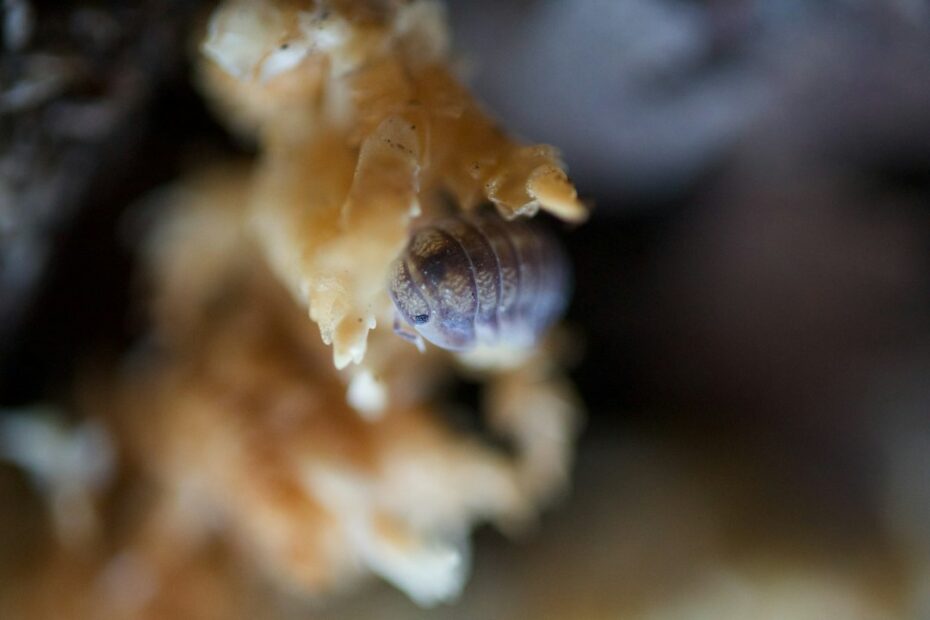
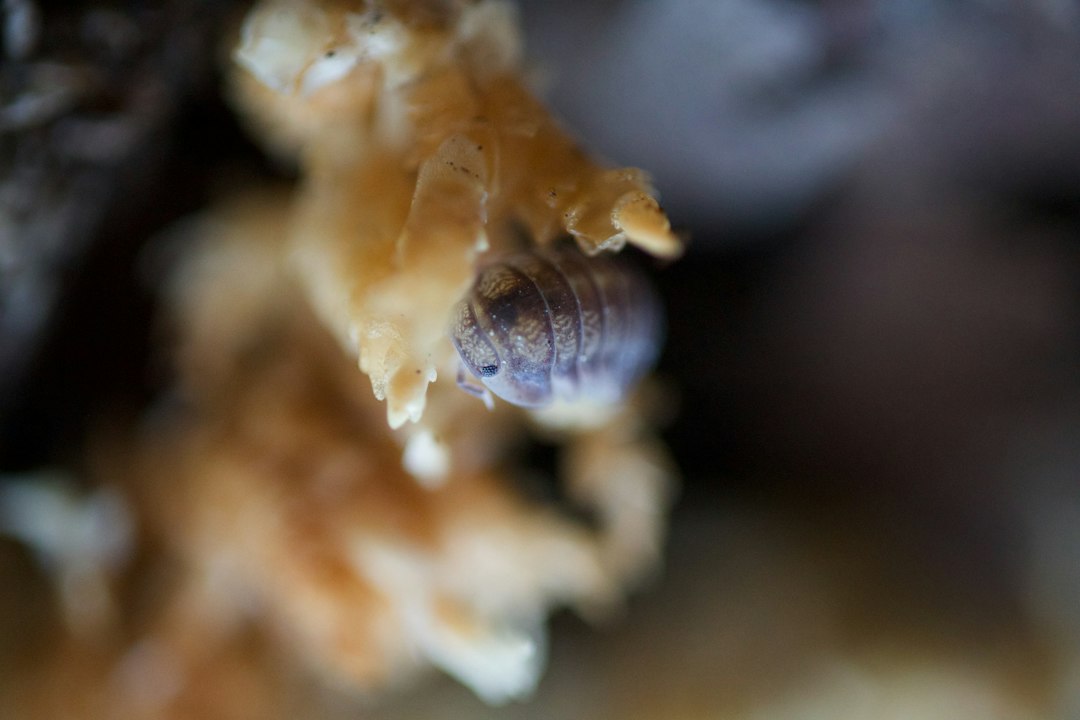
Finding pinhead-sized isopods in a colony can be easy to miss. They are called mancae (singular: manca): the young stage that leaves the mother’s brood pouch. Seeing one is a small but encouraging sign that reproduction has occurred, though a single sighting does not tell you how many young survived.
Where the young come from
Terrestrial isopods do not scatter eggs into the substrate. The female carries developing offspring in a temporary brood pouch, or marsupium, formed beneath her body. Research on Porcellio scaber follows development through the hatched manca stage and the young’s eventual departure from that pouch. The exact timing and details vary with species and conditions.
When a manca first appears, it is a tiny, independent animal—not an insect larva. A commonly used definition describes a manca as lacking the final thoracic leg pair, although developmental terminology can vary across isopod groups. Because the animals are so small and easily hidden, you may notice them only when you lift a piece of leaf litter or see movement along the edge of a shelter.
What to do when you spot one
- Leave the habitat in place. Avoid digging through the substrate to find more. Small juveniles can be injured or displaced during unnecessary handling.
- Keep the moisture gradient. Maintain a reliably moist area and a drier area for choice. Damp substrate is useful; waterlogged substrate is not.
- Keep fine leaf litter available. It gives young isopods cover and access to food as they grow. Do not assume a manca needs a special supplement simply because it is small.
- Check the colony calmly. Look for adults and juveniles during normal care. Avoid making a population estimate from one brief search; most animals may be under cover.
These steps are practical husbandry guidance, not a claim that every species or enclosure should be managed identically. For a new colony, start with the Armadillidium vulgare care guide. If you are planning an observation activity, the classroom pill-bug count guide can help match the animal count to the number of groups.
A useful classroom observation
Students can record whether they see adults, mancae, or larger juveniles during routine checks without removing animals from their habitat. Have them note the date, time, moisture condition, and whether the observation required lifting a shelter. This makes the record more useful while keeping disturbance low. A photograph through the container wall or a short written observation is usually enough; there is no need to collect or isolate the young for a basic class discussion.
For educators who need animals for a planned lab, compare current live isopod listings and confirm larger classroom quantities before building the lesson around them.
Sources
- Milatovic, Tomescu, and Overton, “The embryonic development of the malacostracan crustacean Porcellio scaber”, Zoomorphology (2010). Describes development through a hatched manca that later leaves the brood pouch.
- Haffner and colleagues, “Histological studies on the marsupium of two terrestrial isopods” (2015). Examines the brood pouch in two terrestrial isopod species.
- Natural History Museum of Los Angeles County, Crustacea Glossary: “Manca.”