
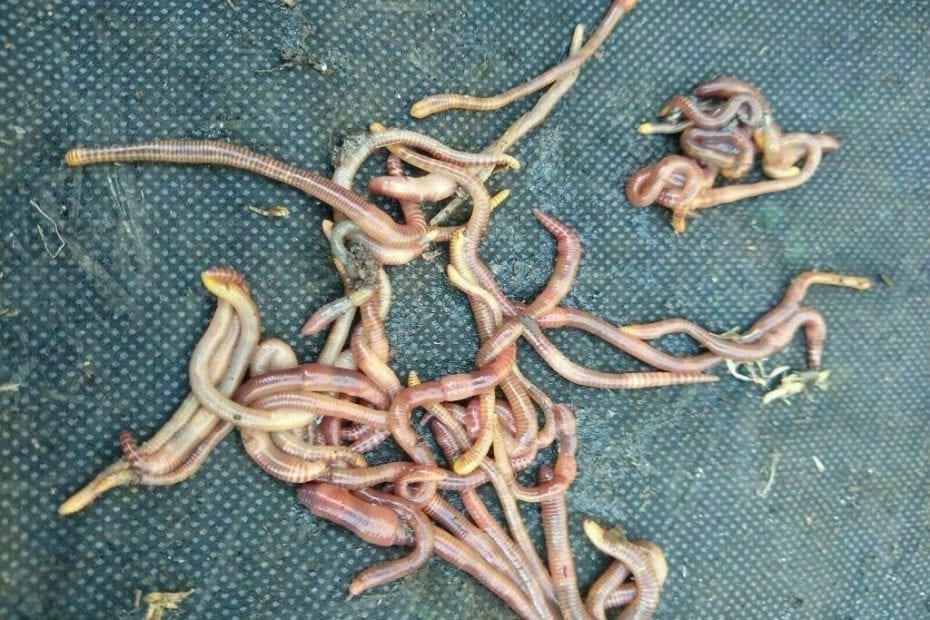
A worm bin should feel biologically active, but it should not behave like a hot compost pile. If the bedding suddenly becomes noticeably warm, the heat is usually being produced by microorganisms decomposing a concentrated mass of fresh organic material. The worms are living in that microbial community; they are not the main source of the heat.
That distinction matters because red wigglers (Eisenia fetida) are adapted to moist, oxygenated layers of decomposing litter near the surface. They are excellent partners in a cool composting system, but they are poorly suited to the high temperatures that make conventional compost piles work quickly.
Measure the bedding, not just the room
The air temperature beside a bin can be reassuring while the center of the bedding is becoming dangerously warm. Utah State University Extension recommends 55–77°F as the range in which red wigglers thrive and emphasizes that the internal bin temperature matters more than ambient temperature. Its guidance also warns that temperatures approaching 90°F can be fatal. Oregon State University Extension likewise identifies 55–77°F as the range in which red wigglers do best.
Use a simple soil or compost thermometer if you have one. Insert the probe into the active feeding layer and check both the center and an edge. A center that is several degrees warmer than the edges usually points to localized microbial activity. The exact reading is less important than the direction of change: a bin that continues to warm after a large feeding deserves attention before the worms begin to show obvious stress.
Why a worm bin heats up
Microorganisms release heat while breaking down organic matter. In an ordinary worm bin, the food is spread through enough bedding that this heat is not noticeable. Trouble begins when the materials start acting like a small compost pile.
Common causes include:
- Too much food in one place. A large pocket of scraps gives bacteria an unusually concentrated food source.
- Fresh, nitrogen-rich material. Grass clippings are a classic example. University of Minnesota Extension notes that they are high in nitrogen and that thick, wet layers can mat together and restrict oxygen.
- Dense or waterlogged bedding. Water fills pore spaces that would otherwise hold air. Decomposition may become anaerobic, producing sour or foul odors in addition to stressing the worms.
- Food that was already heating. Partly composted material can continue generating heat after it enters the bin.
- A hot location. Direct sunlight, a closed vehicle, an unventilated shed, or a warm classroom window can raise the entire bin even when feeding is appropriate.
Heat, moisture, and oxygen are connected. Red wigglers breathe through moist skin, so the bedding cannot be dry; however, saturated bedding displaces air. A healthy bin needs moisture and open pore space at the same time.
Signs the worms are under stress
Temperature stress often appears as a change in distribution before it causes mortality. Worms may crowd the cooler edges or bottom, climb the walls and lid, or attempt to leave the bin. They may also become unusually sluggish. A sour, rotten, or ammonia-like odor is evidence that the bedding and feeding balance needs correction, even if the thermometer is not yet alarming.
Worms occasionally explore the sides of a new or recently disturbed bin, so climbing alone is not a diagnosis. Consider it together with temperature, moisture, odor, and the location of the worms. Our guide to why red wigglers climb bin walls covers the other common causes.
How to cool an overheating worm bin safely
- Stop feeding. Do not add more material until the temperature has returned to a stable range and most of the existing food is being processed.
- Remove the concentrated hot material. Lift out the large food pocket, fresh grass, or other mass that is actively heating. There is no advantage in asking the worms to endure it.
- Restore structure with dry bedding. Gently loosen compacted material and mix in shredded corrugated cardboard, plain paper, or dry leaves. The goal is to absorb excess water and reopen air spaces, not to turn the bin aggressively.
- Move the bin to a cooler, shaded location. Indoors is often safer during a heat wave. Keep it away from direct sun and appliances that release heat.
- Recheck the center. Measure again after the corrective changes. Continue monitoring until the internal temperature stops rising.
Avoid pouring cold water into the bin or placing loose ice directly on the worms. Both can create abrupt temperature changes and leave the bedding saturated. If emergency cooling is necessary, a sealed cold-water bottle placed against one side provides a temporary cooler zone without flooding the habitat. Remove it after the immediate danger has passed and correct the underlying feeding or ventilation problem.
Preventing the next temperature spike
Feed in smaller portions and rotate the feeding location. Burying a modest amount in one section makes it easy to inspect what remains before adding more elsewhere. The amount a colony can process changes with temperature, population size, food type, and the maturity of the bin, which is why observation is more reliable than a fixed feeding calendar. See how much food red wigglers can process for a practical way to adjust portions.
Keep a reserve of dry bedding beside the bin. Add some whenever wet scraps begin to make the bedding dense or glossy. In classrooms, a simple weekly record of center temperature, edge temperature, moisture, odor, and visible food can turn routine care into a useful lesson in decomposition and environmental measurement. Students can look for relationships without deliberately exposing the worms to harmful heat.
For bins that will be unattended for a weekend or school break, stability is more important than providing extra food. Our classroom weekend-care guide explains why a well-prepared bin can usually be left without a large “just in case” feeding.
The practical rule
A mildly warm spot is a signal to inspect the bin, not a reason to panic. Stop the rising trend, remove concentrated heating material, restore airy bedding, and give the worms access to a cooler zone. Once the bedding is stable and smells earthy again, resume feeding with a smaller portion.
If you are starting a vermicomposting colony, our 125-count red wiggler culture provides the correct composting species. The habitat still does the essential work: cool, moist, well-aerated bedding is what allows the worms and their microbial partners to function together.